Posted on

Sale

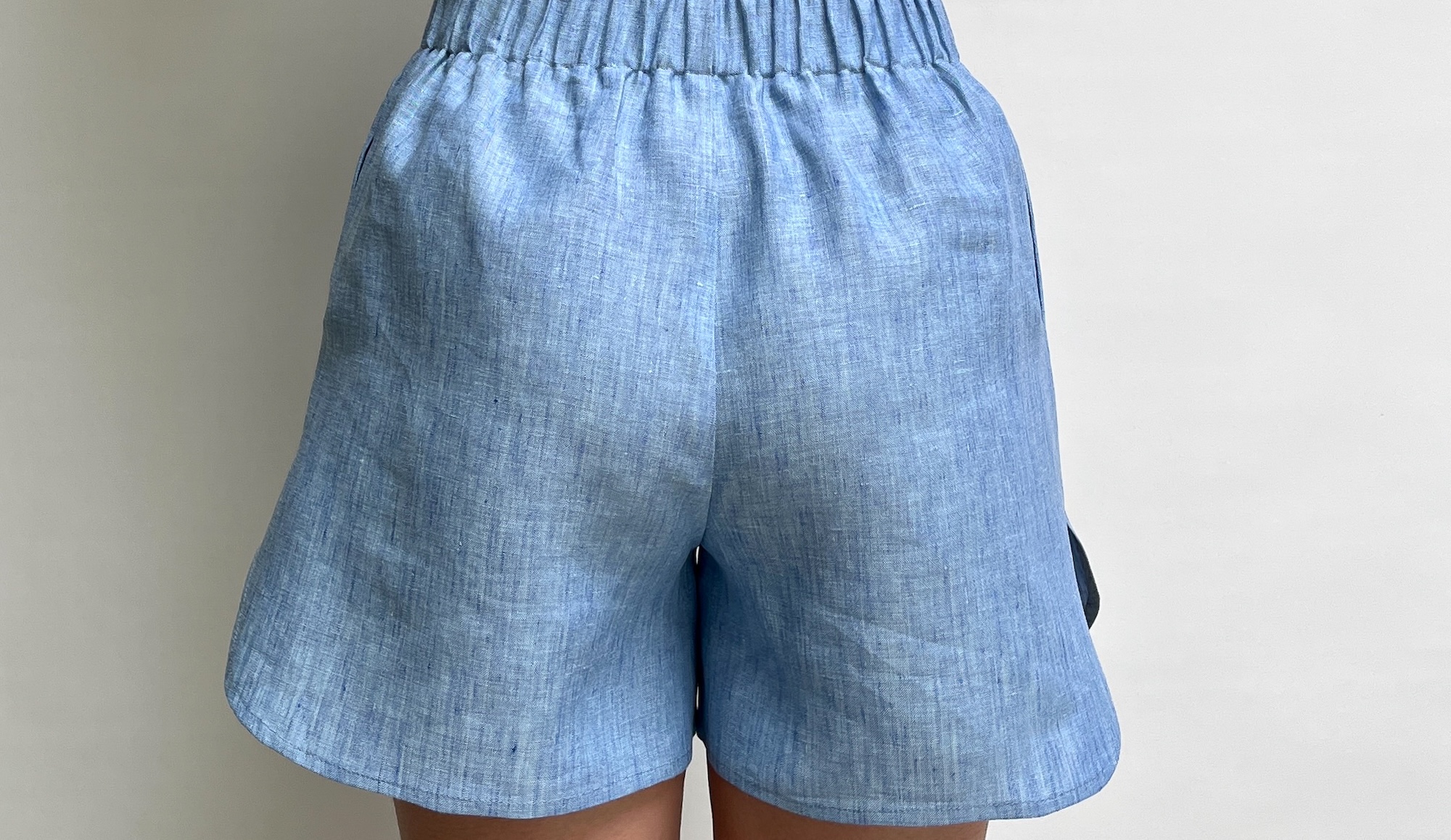
image of sale banner

🪡 Weekend sale alert! 🧵

20% off all PDF patterns – ends Sunday.

No code needed, just download & sew for instant joy.

  • 20% off individual digital PDF Patterns.
  • Excludes PDF pattern Collections (pattern bundles) charity patterns.
  • Sale ends on Sunday 12th October 11.59pm (BST)

Posted on

How to Adjust the Rise of a Trouser Pattern

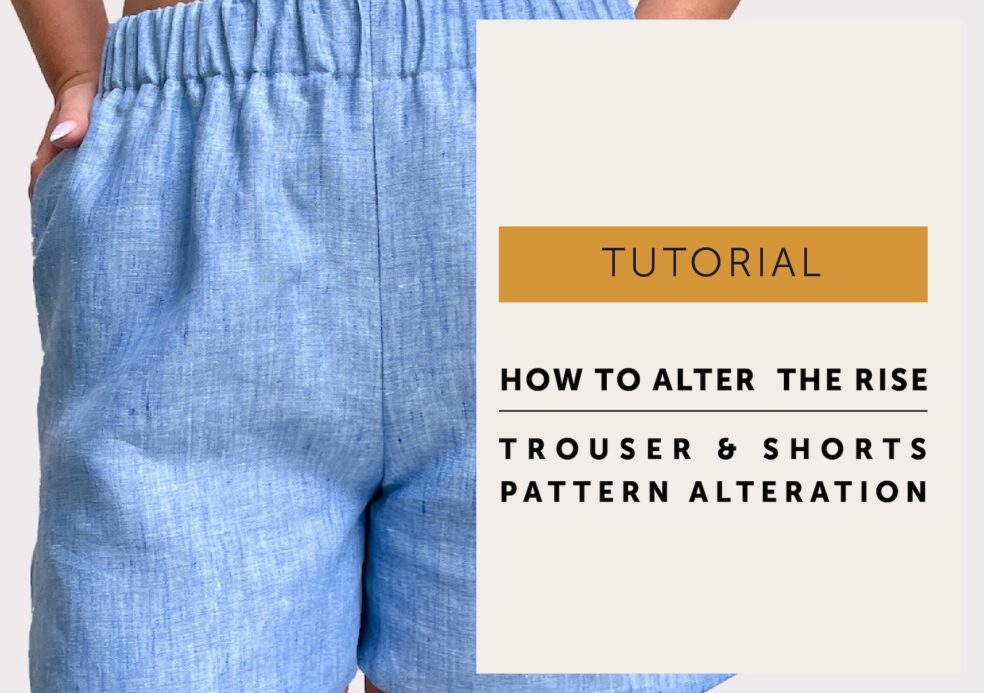
image of text - How to alter a trouser Rise Tutorial

Lengthening or shortening the rise (crotch) of shorts or trousers (pants for my US friends) is easy enough to do with a bit of slashing and spreading of your pattern. That actually sounds much more dramatic than it is.

Having a few pattern adjustments options in your sewing tool box will always be handy as we are all different shapes and sizes, tall and short, or you might want to move the waistline for aesthetic reasons. 

As with most pattern alterations, think about where you need the extra fabric. And vice-versa remove fabric where you don’t need it. If you need more fabric to go over your bum, that’s where you add it. If you have an upsetting fold of fabric at the front rise , that’s where you don’t need it!

This alteration may be needed on the front rise or the back rise, or possibly both. And you may still need to make other alterations to your trouser pattern.

I’ve got 2 methods to alter the Rise (crotch length) of trousers to share with you. 

How to alter a Trouser Rise (crotch) – This will show  you how to alter a trouser rise without changing the side seam length. It can be done on the front or the back rise or both of the rises.

Long/short Torso Adjustment – The second method is a useful pattern alteration for those with a longer or shorter torso and shows how to alter both the front and back rise (crotch length) and the side seam length.

IF THE RISE IS TOO LONG – it’ll all be hanging too low and looks saggy (lovely) with excess fabric that you want to pinch out, you might even feel the need to pull them up all the time to make the rise sit comfortably, but then the trouser sits too high at the waist. 

IF THE RISE IS TOO SHORT – your trousers will be riding up uncomfortably high and you’ll be trying to pull the area down, the fabric may be pulling and creating drag lines. The waist won’t be sitting in the correct position and you’ll feel like you want to pull them up. 

This is quite a common alteration on the back rise. You’ll feel that it just isn’t long enough and too short over the seat area, and the trousers may be pulling downwards at the centre of the waist especially when sitting down. It’s an easy fix – you just need a bit more fabric to go over your bum.

Tools

  • A copy of your trouser or shorts pattern (it’s best practise to keep the original)
  • ruler
  • pencil
  • tape
  • Paper

Toile Time

Hopefully you’ve made a toile. That will give you a lot of information on the fit of your trousers.

  • Make sure that the waist and hips are not too tight, a tight garment will ride upwards and not sit correctly on your body.
  • Also take care not to overfit your garments, it’s usual to have some wrinkles as you need to be able to move and sit down.
  • Pop your Toile on with the waistline sitting where it should be – keep in mind not all trousers are designed to sit at the natural waistline. 
  • Pin or cut the toile to establish the amount you need to add/subtract from your rise. If I’m honest it’ll be a little bit of guesswork as it’s not easy to cut and pin a toile on yourself, be prepared to pull it on and off a few times but it will give you a good idea of how much to add to your pattern and you can refine it if you need too. 

How to Alter a Trouser or Shorts Rise

Lengthening or shortening the rise (crotch) of shorts or trousers (pants) is a very easy pattern alteration

Rise is too Long – Pin the excess wedge of fabric on your toile at the centre and reducing to nothing at the side seams.

Rise is too short – Slash the toile open from the centre to the side seam. Let the toile open as much as it needs, pin some fabric behind to establish how much you’ll need to alter the rise. (You may be able to just measure from the top of your trouser to where it should sit on your body but often you’ll need to slash the toile open).

How to Alter For a longer or shorter Torso

Lengthening or shortening the rise (crotch) of shorts or trousers (pants) is a very easy pattern alteration

Rise is too Long – Pin the excess wedge of fabric, try to keep it an even amount, on your toile all around the body. 

Rise is too short – You may be able to just measure from the top of your trouser to where it should sit on your body but often you’ll need to slash the toile open. Cut all the way through the toile and pin some fabric behind to help establish how much you’ll need to alter the rise.

Adjust the rise on a trouser pattern (without touching the side seam).

You can just alter the FRONT Rise or the BACK rise, or both rises using this method.

Lengthening or shortening the rise (crotch) of shorts or trousers (pants) is a very easy pattern alteration
  • Using a copy of your pattern piece mark the seam allowances so you know where the stitch lines are.
  • Draw a lengthen/shorten line across the pattern through the Rise, ensure it is perpendicular to the grain line. I prefer to do this so it intersects the rise seam on a straighter section rather than the curve.
  • Cut along the line, starting at the RISE seam and cut UP TO the side seam stitch line but NOT through it. Cutting from OUTSIDE of the pattern, cut through the seam allowance and up to the same point on the stitch line, leaving a 2-3mm hinge of paper. 
  • *If you hinge your pattern from the outside edge of the pattern instead of the stitch line, your seam increases in length and then your pattern won’t fit back together properly.

To Lengthen the Rise Seam

Lengthening or shortening the rise (crotch) of shorts or trousers (pants) is a very easy pattern alteration
  • Place some paper behind your pattern pieces and tape the lower section of the pattern securely in place.
  • At the Rise stitch line, mark the amount you need to increase the rise by above the lower pattern piece.
  • Pivot the top pattern piece upwards from the hinge to add the extra amount and tape in place. 
  • Redraw seam lines to give yourself a smooth line, and also redraw the grainline.
  • THE CHAIN EFFECT – remember you may need to alter any other pattern pieces affected such as facings & fly patterns

To Shorten the Rise Seam

Lengthening or shortening the rise (crotch) of shorts or trousers (pants) is a very easy pattern alteration
  • Place some paper behind your pattern pieces and tape the lower section of the pattern securely in place.
  • Mark the amount you need to reduce the rise by ON the lower pattern piece.
  • Pivot the top pattern piece downwards from the hinge, overlapping the pattern pieces and tape in place. 
  • Redraw seam lines to give yourself a smooth line, and also redraw the grainline.
  • THE CHAIN EFFECT – remember you may need to alter any other pattern pieces affected such as facings & fly patterns

Long/Short Torso Adjustment

To adjust the Front Rise, Back Rise and the side seams of your shorts or trousers.

Lengthening or shortening the rise (crotch) of shorts or trousers (pants) is a very easy pattern alteration

Use to lengthen the Front Rise, Back Rise and Side Seams 

  • Using a copy of your pattern piece mark the seam allowances so you know where the stitch lines are.
  • Draw a lengthen/shorten line across the pattern through the Rise, ensure it is perpendicular to the grain line. I prefer to do this so it intersects the rise seam on a straighter section rather than the curve.
  • Cut all the way along the line.
  • Place some paper behind your pattern pieces. Anchor the lower section of the pattern with tape.
  • Extend the grain line upwards. 
  • Draw a second parallel line above the your shorten/lengthen line the amount you need to lengthen the rise by. 
  • Tape the upper portion of your pattern to the new line, matching up the grainline. 
  • Redraw your seam line so they are a smooth line, and also redraw the grainline.
  • THE CHAIN EFFECT – If you have a pocket bag, or other pattern pieces such as facings or Fly zips, remember you may need to alter them too. 
Lengthening or shortening the rise (crotch) of shorts or trousers (pants) is a very easy pattern alteration

To shorten the Front Rise, Back Rise and Side Seams 

  • Using a copy of your pattern piece mark the seam allowances so you know where the stitch lines are.
  • Draw a lengthen/shorten line across the pattern through the Rise, ensure it is perpendicular to the grain line. I prefer to do this so it intersects the rise seam on a straighter section rather than the curve.
  • Draw a second parallel line below it the amount you’d like to reduce the rise by.
  • Cut all the way along the first line.
  • Overlap the pattern pieces to reduce the rises and tape the pattern matching up the grainline. 
  • If necessary, redraw your seam line so they are a smooth line, and also redraw the grainline.
  • THE CHAIN EFFECT – If you have a side seam pocket I’d suggest remarking the pocket position to maintain the original pocket mouth opening size or you may find your hand doesn’t fit. You may need to alter other pattern pieces too. 

As with all pattern alterations, check when you’ve finished that your pattern seams still match and are the same length, they run smoothly and test your finished alterations with another toile before cutting into your good fabric.

All done and now you know How Adjust the Rise on a pattern for perfectly fitting trousers! Mrs M x

Posted on

Join the Housecoat Workshop with Maria Thomas

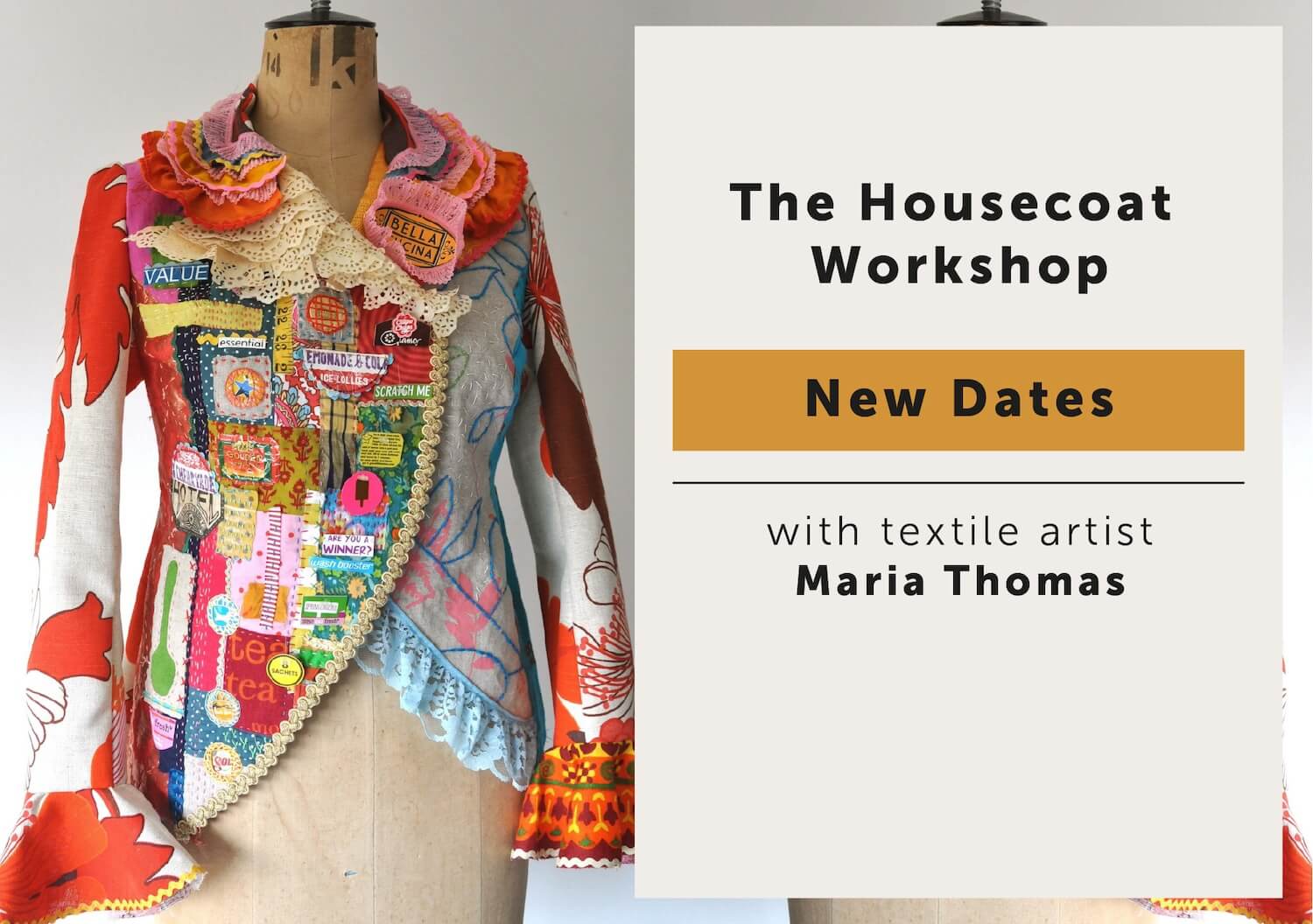
image of Maria Thomas of text

The Housecoat Workshop with Maria Thomas. We have a new date for the incredible Housecoat Workshop led by the textile artist Maria Thomas.

During this 2-day Textiles Workshop you will explore used cloth within a garment. Maria is a long time friend of mine, and a partner in crime for many of my textile adventures. She’s such an inspiring textile artist you are in for a real treat! You’ll be full to the brim of inspiration, ideas and a new found way to view textiles.

2 day artist-led workshop.

Learn how to create your own collaged textile-art jacket housecoat hanging using reclaimed household linens and paper wrappers mixed with quilted collage techniques.

Under Maria’s expert guidance you will learn how to use a pre-prepared jacket pattern to create a cloth and paper collaged art garment. 

Along with pattern layout (using recycled papers and vintage fabrics) you will construct an original appliqué and quilted textile-art garment.

Maria is a textile artist and the primary purpose of this workshop is to explore and create an heirloom piece rather than a wearable ‘fashion’ jacket. 

Explore Maria’s Housecoat Series for some inspiration and to see how she uses found objects, papers & mementos in her work.

There will most definitely be a spot of tea + coffee + cake involved and also a 10% discount on Kleins Haberdashery for during the workshop if you fancy a rummage through my wares! 

The Textile Artist / More about Maria

Maria has over 30 years experience teaching embroidery, print and textile design, in further and adult education as well as delivering bespoke textile workshops to groups around the UK. She loves to share her passion for textiles and enjoys giving colourful talks about her career and work inspirations. Working with paper, cloth and found objects Maria’s workshops range from appliqué, quilting and stitched collage to hand dyeing techniques and processes.

Maria’s work focuses on rehousing everyday objects that have a specific association or meaning to her. Notions of motherhood, shopping lists, food wrappers and graphic packaging – offering assistance to domestic chores – are carefully sourced, cut out and stitched before being absorbed into the fabric by patchwork and quilting techniques. Shaping memories and experiences into her own visual language Maria’s work is a response to the events of her daily life.

Maria is the tutor and founder of the exhibiting group Together Textiles who meet for workshops in Warwickshire.

Maria Thomas: Keepsakes in stitch – read the full article in Textile Artist here

Posted on

Make a Peg Bag!

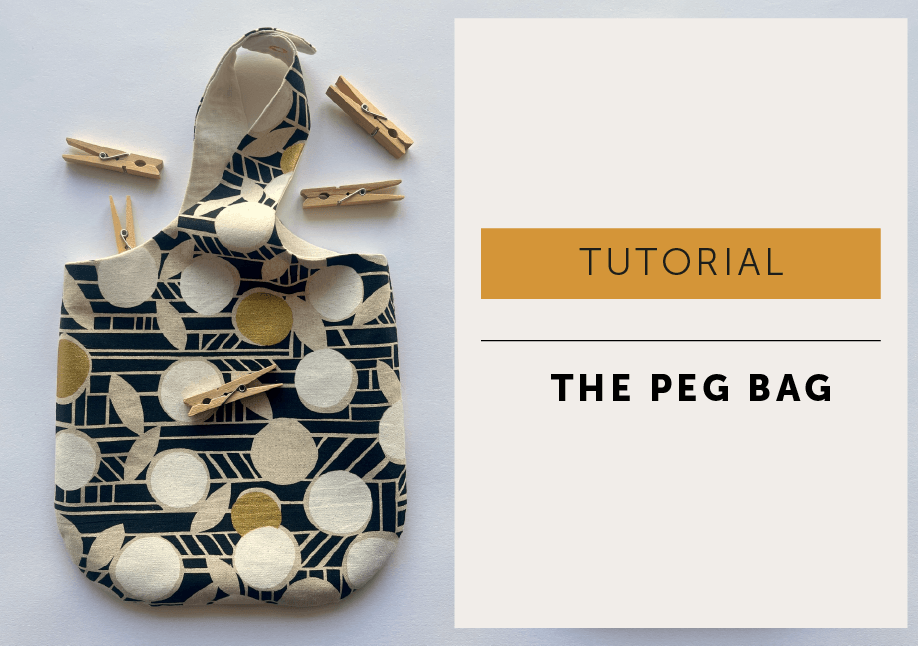
image of the peg bag

Make a marvellous peg bag with our quick and easy to sew PDF sewing pattern. It’s super easy, is very handy and makes a lovey gift or a cute little evening bag in the right fabric. And even better for each pattern sold we are donating £1.50 to the children’s charity EVC Uganda. This was previously a free pattern but we decided this would be a great way to kick off 2025.

EVC Uganda is a charity that empowers vulnerable children in communities where support is needed the most. EVC focuses on providing communities with funding to create projects that will have lasting impacts for generations to come. Your support will go directly to the school that we support, to purchase crucial supplies for the children. You can read more about their work HERE.

More about the peg bag pattern. I’ve had mine on the go for years. You see I like pretty things but they do have to be practical. Things you touch and use everyday should not be ugly or annoying. I really took that William Morris quote to heart.

“If you want a golden rule that will fit everything, this is it: Have nothing in your houses that you do not know to be useful or believe to be beautiful.”

William Morris

And who doesn’t like their washing drying outside while wafting in the gentle breeze of a summers day? Now, I know not everyone can or wants to hang their washing out to dry, no judgement here, but it is still quite handy for storage of those odd bits and pieces.

The Peg Bags actually turned out to be a really popular sew as a gift. The handle is big enough to hang over your arm and grab a peg with ease and the popper means you can actually hang it off the washing line for full hands-free freedom.

It’s also a great little skill builder and the perfect project if you are new to sewing and just want to get used to sewing on your machine without having to worry about fitting a garment. The pattern makes a lined/reversible bag, but you could make it unlined by cutting a single layer and just binding the raw edges to finish. And to be very Eco-conscious you could use up scraps of fabric by adding seams (don’t forget to add the seam allowance!) to the pattern so you can use up those smaller bits of fabric. And feel free to embellish your peg bag with embroidery or appliqué to make a really lovely personalised gift.

THE PEG BAG - free sewing pattern. Maven Patterns

How to Make a Peg Bag with our PDF Sewing Pattern


Tools

  • The Peg Bag PDF patternsewing pattern available here.
  • The Pattern Prints on 4 sheets of A4 or US letter sized paper.
  • 10 page Maker Instruction Booklet (in English). You can print your instructions or view the pattern instructions on a screen, or just follow the instructions below.
  • We have a Printing Tutorial here if you are new to PDF patterns.
  • You will need all the usual sewing stuff…a sewing machine, iron, decent scissors, pins, tape measure etc.

Suitable fabrics

MAIN FABRIC Any stable woven fabric will be fine, so have a good rummage through your stash but keep in mind it will need to be sturdy enough to hold its shape reasonably well. I’d suggest Denim, linen, quilting cotton, those kinds of fabric.

LINING/INNER FABRIC you could use the same as your outer fabric or if you have quite a heavy main fabric balance it with a lighter weight contrast fabric. I’m imagining a denim outer with a cotton lawn contrast lining.

Fabric Requirements & Haberdashery

MAIN FABRIC (for outer shell): 1 piece x 50cm deep x 60cm wide (20″ x 24″) 

CONTRAST FABRIC (for lining/inner shell): 1 piece x 50cm deep x 60cm wide (20″ x 24″) 

IRON ON INTERFACING: 1 piece x 28cm deep x 60cm wide (11″ x 24″) 

LARGE PRESS STUD – mine is 2cm (3/4″) but use what you have or you could do a button and buttonhole

MATCHING SEWING THREAD – I’ve used a contrast so it shows in the photos

Abbreviations

RST: right side together / RS: right side / WS: wrong side / WSU: wrong side up / SA: seam allowance

01. Prepare your pattern.

Tape your pattern together and cut your pattern out using the black line. The grey line is the stitch line.

You will need to join the interfacing pattern together.

02. Cut

PATTERN A – Cut 2 in main fabric for the outer shell

PATTERN A – Cut 2 in contrast fabric for the inner shell/lining

PATTERN B – Cut 2 in INTERFACING

TIP: At each notch remember to make a small snip in the seam allowance (SA)

03. Apply the interfacing

CONTRAST FABRIC – place interfacing to wrong side (WS) and iron into place to reinforce handle and top edge

04. Time to sew!

Press as you go! I can’t stress this enough for any sewing project but taking the time to press anything you stitch will give you a much better result.

MAIN FABRIC/outer shell – place with Right Sides Together (RST) and stitch with 1cm seam allowance (SA) around the bucket. Press the seam.

Trim the SA down to 6mm (1/4″) at the curve so it will lay flat when turned to RS.

More to Sew …


05.

CONTRAST FABRIC/inner shell – place with Right Sides Together (RST) and stitch with 1cm SA around the bucket STOPPING at the notches to leave an opening in the base. Press the seam.

Trim the SA down to 6mm (1/4″) at the curve so it will lay flat when turned to RS.

06.

Turn the shells through to RS and press seam.

07. JOIN INNER & OUTER SHELLS TOGETHER

Turn the inner shell inside out so WS is facing you.

Slide the outer shell inside the inner shell so RST, aligning the raw edges, notches and at the seams.

Stitch with a 6mm SA. Press the stitch line.

TIP: If you’ve taken a slightly bigger seam allowance on the curve of the strap or have bulky fabric trim the SA down to a scant 6mm (1/4″) at the curves so it will lay flat.

08.

Turn through to Right Side (RS) by pulling the outer shell out through the hole left at the base of the inner shell.

The straps can be a bit fiddly to turn through but you can use a chopstick or something similar to help poke them to the RS.

09.

If you are making a reversible bag the seam should sit exactly on the side so it neither favours the inner or outer shell. If you are making it as a lined bag roll the inner shell lining slightly to the inside of the bag.

Press the seam.

I’d normally do an understitch to help hold the lining but it’s quite fiddly so I’m happy to skip it on this occasion and just give the seam a good press.

If your fabric doesn’t press well, giving you a nice sharp edge, or doesn’t stay flat, consider edgestitching/topstitching around the opening and handles.

10.

Close the opening in the base of the inner shell with a slipstitch.

free sewing pattern - attach a popper

11. Stitch the press stud securely in place. Or use a button and buttonhole if you prefer.

A quick final press and you’ve finished!

I hope you are very happy with your lovely handmade peg bag!

Have you seen our free Eye Mask PDF Sewing Pattern? Take a look HERE.

shop Maven sewing Pattern CTA

More to Sew …


free sewing pattern - free peg bag pattern